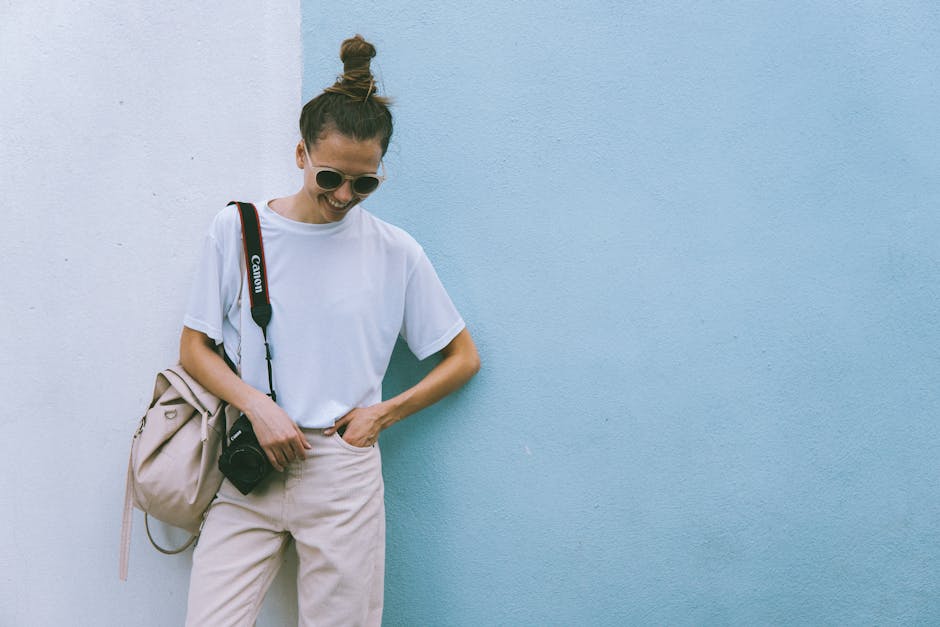
You’ve got a wardrobe full of clothes and nothing feels right to put together. I was in that exact spot three years ago — spending 10 minutes every morning staring at a rail of random shirts and jeans that didn’t work as a unit. The fix wasn’t buying more stuff. It was learning a few reliable formulas and actually committing to them.
5 Casual Outfit Combinations That Work Every Time
These aren’t editorial lookbook picks. These are outfits I come back to repeatedly because they’re easy to assemble, look deliberate, and fit most social situations — a casual lunch, a weekend errand run, a low-key night out.
- White tee + dark jeans + white sneakers. The most bulletproof casual combination in existence. Uniqlo’s Supima Cotton Crew Neck Tee ($15) keeps its shape after 50 washes. Pair it with Levi’s 511 slim jeans ($70) and Nike Air Force 1 Low ($110). Clean, never overdressed, works year-round.
- Oversized hoodie + straight-leg trousers + clean runners. Carhartt WIP Chase Hoodie ($80) worn over nothing underneath, Dickies 873 work pants ($35 — they run trimmer than you’d expect), and New Balance 574 ($90). Reads relaxed but intentional.
- Oxford button-down + raw denim + leather boots. Not just for the office. Gap’s Oxford ($45, almost always on sale) half-tucked into A.P.C. Petit Standard jeans ($200 — worth it once you’ve worn them 200 times) with Chelsea boots. Elevated but still fully casual.
- Rugby shirt + wide trousers + low-profile sneakers. A slightly more fashion-forward take. Ralph Lauren rugby shirts run around $100. Adidas Samba OG ($100) at the bottom undercuts any risk of looking too try-hard.
- Graphic tee + olive cargo pants + Converse. Works when the tee is small-print and the cargos aren’t overtly tactical. Converse Chuck Taylor All Star ($65) keeps the lower half quiet. Avoid cargos with more than four external pockets — past that point it tips into costume territory.
One rule across all five: fit matters more than brand. A $15 Uniqlo tee in the right size looks better than a $90 premium tee that hangs off your shoulders.
Also worth saying — you don’t need all five. Pick two formulas and rotate them. Wearing the same well-assembled outfit twice a week is better than wearing a poorly assembled one once.
The Proportion Rule You Actually Need
Oversized tops need slim or tapered bottoms. Wide-leg trousers need a fitted top. This one balance rule prevents about 80% of the “something looks off but I can’t figure out what” problem that plagues most guys’ casual dressing.
Shoes Signal Effort More Than Any Other Piece
A beat-up pair of sneakers underneath a clean outfit reads as careless regardless of what’s above them. You don’t need to spend $200, but one pair that isn’t visibly scuffed or worn down makes a real difference. New Balance 574 and Adidas Samba OG both land around $90–100 and hold up well with consistent use.
What’s Worth Spending On vs. What Isn’t

Not every piece deserves equal budget. Here’s the breakdown I actually follow:
| Piece | Spend or Save? | Why | Recommended Pick | Price |
|---|---|---|---|---|
| Jeans | Spend | Worn constantly, fabric quality is visible | Levi’s 501 or A.P.C. Petit Standard | $70–$200 |
| White T-shirts | Save | They fade — buy three at a time, replace annually | Uniqlo Supima Cotton Crew Neck | $15–$20 |
| Sneakers (one good pair) | Spend | Cheapens the whole outfit if scuffed or flimsy | New Balance 574 or Nike Air Force 1 | $90–$110 |
| Hoodies | Mid-range | Premium fabric shows; ultra-cheap pills fast | Carhartt WIP or Champion Reverse Weave | $50–$90 |
| Chinos / Trousers | Save | Quality is easy to find at mid-price | Dickies 873 or Uniqlo Smart Ankle Pants | $30–$50 |
| Outerwear | Spend | Visible constantly — cheap jackets look cheap | Levi’s Sherpa Trucker or Patagonia Synchilla | $100–$170 |
The jacket and shoes are the two things other people actually register. A $15 Uniqlo tee under a good jacket looks intentional. The same tee under a bad jacket doesn’t save anything.
Where Most Guys Over-Spend
Logo hoodies, hype graphic tees, and accessories. These are impulse purchases that rarely get worn more than five times. A $70 tee from a culturally relevant brand will see less use than a $12 plain white tee that fits correctly. Spend where it’s visible and structural. Not on novelty.
The One Piece to Buy First
A well-fitting pair of dark-wash straight jeans. Levi’s 501 in black or indigo ($80) works with almost everything casual and communicates effort without looking like you tried too hard. Start there.
Why Most Casual Outfits Fall Flat
It’s not the wrong brand. It’s wearing all your favorite pieces at once. Casual dressing collapses when nothing is allowed to stand out — when the hoodie, the sneakers, the hat, and the bag are all competing for attention simultaneously. Pick one interesting piece and let everything else go quiet behind it.
How to Build a Look Around One Statement Piece

The fastest way to stop overthinking outfits is to start with one piece and treat everything else as a neutral backdrop. This sounds obvious. It demands more restraint than most guys default to.
Say you have a pair of ASICS Gel-Kayano 14 ($120) in a bold colorway — the sand/teal or cream/burgundy versions are both doing a lot visually. Those shoes are carrying the outfit. Everything else should step back: plain white tee, slim grey sweatpants or olive chinos, no visible accessories. The result reads as deliberate because there’s a clear visual anchor and nothing competing with it.
Same logic applies to a vintage graphic tee or a patterned flannel. If the shirt is interesting, the trousers should be boring. Straight navy chinos or black denim, no print, nothing distressed or detailed.
The Visual Hierarchy of a Casual Outfit
From most to least dominant, in terms of what people actually register:
- Outerwear — seen first, remembered most
- Footwear — noticed subconsciously but registers strongly
- Top — dominant in warmer months without a jacket
- Trousers/jeans — usually background unless you’re wearing wide-leg or a strong color
- Accessories — finishing details, not the story
Once this hierarchy is clear, the decision becomes straightforward. Loud jacket? Quiet shoes. Bold sneakers? Neutral top and plain trousers.
What Happens When You Ignore This
Every piece at the same visual volume. Busy patterned shirt, chunky statement sneakers, logo-heavy outerwear, branded bag all at once. That’s not streetwear layering — it’s visual noise. Nobody reads it as intentional.
The Levi’s Sherpa Trucker jacket ($100) is a high-visibility outer piece. When I wear it, everything underneath goes plain: white tee, slim dark jeans, white Air Force 1s. The jacket gets to be the thing because nothing else is competing for attention.
A Quick Test Before Leaving the House
Look in the mirror and identify the single most interesting piece in the outfit. If you can’t find one — or if you find three — something needs to change. Either add something interesting or remove a competing element. The answer should be exactly one piece.
Common Questions About Casual Dressing, Answered Directly
Can I wear joggers outside the gym?
Yes, but not gym joggers. There’s a real difference between a tapered French terry jogger and a pair of mesh athletic shorts with a drawstring. Slim-fit joggers in a neutral — black, charcoal, navy — work with a clean sneaker and a fitted crewneck or half-zip. Anything with a brand name running down the leg or reflective side panels is gym-only, full stop.
What fills the gap between too casual and too smart?
An overshirt or chore coat worn open over a tee. It adds structure without formality and reads as intentional without any real effort. Universal Works does solid flannel overshirts around $150. Uniqlo’s flannel checked shirt ($40) works almost as well worn open as an outer layer. Either one solves the gap immediately.
Do I need to match my belt to my shoes in a casual outfit?
No. That rule lives in the dress code world. When you’re wearing jeans, a tee, and sneakers, leather tone matching is irrelevant. If the outfit involves leather boots, a leather belt, and a button-down — then yes, match the tones. Below that threshold, don’t think about it.
Is there a casual outfit approach that works better for shorter guys?
Vertical lines and monochrome. Avoid wide-leg trousers that break heavily at the ankle — they cut visual height in half. Slim or tapered fit in a consistent color family works better. A monochrome look in charcoal or navy reads as taller than a sharp contrast split between top and bottom halves.
The Sneaker Rule Most Guys Get Wrong
Every guy thinks his sneakers are versatile. Most aren’t. This is where a lot of casual outfits break down without the wearer ever identifying why.
The honest position: two pairs of sneakers cover everything. One clean, low-profile everyday pair — Nike Air Force 1 ($110) or Adidas Samba OG ($100) both qualify, and either works across most casual categories. One slightly more interesting pair for when you want the shoes to lead — ASICS Gel-Kayano 14 ($120) or New Balance 9060 ($130) work well in that role.
Running shoes from actual performance brands — Brooks Ghost, ASICS Gel-Nimbus, Nike Pegasus — do not belong in a casual outfit unless the whole outfit is built around an intentional athletic aesthetic. Wearing them with jeans and a button-down reads as an afterthought, not a style decision.
The Sneaker That Over-Performs Its Price
Adidas Samba OG at $100. Works with slim jeans, chinos, wide-leg trousers, and even more tailored casual pieces. Low profile, clean silhouette, restrained branding. The most adaptable casual sneaker I’ve owned across multiple years and multiple wardrobe rotations. If you own nothing else, start here.
The Sneakers That Require Commitment
Chunky dad silhouettes — New Balance 2002R, Nike Air Max 95 — are specific-use shoes. They demand a particular outfit context, usually slim or tapered on top, and clash with anything business-casual adjacent. Know exactly what outfit you’re building before spending $130+ on them. They don’t just slot into an existing wardrobe the way the Samba does.
Color Combinations That Work Without Thinking
Color theory for everyday menswear doesn’t need to be complicated. Four pairings cover almost every situation:
- Navy + white + tan — Default setting for most men’s casual dressing. Clean, classic, reads well in any light or context.
- Charcoal + black + white — Monochrome with enough contrast between pieces to avoid looking flat. Charcoal top, black trousers, white sneakers.
- Olive + black + grey — Earthy base with neutral contrast. The olive reads intentional without being loud, and grey or black grounds it cleanly.
- Brown + cream + rust — Warm palette, strongest in autumn and winter. Cognac leather tones in footwear or accessories elevate the whole combination.
What breaks casual color combinations: pairing two mid-tones without enough contrast to read as intentional. Beige trousers with a khaki shirt looks like you got dressed in the dark. Go either closely matched (true monochrome) or clearly contrasted. The in-between zone is where outfits go wrong.
The Black Jeans Maintenance Problem
Black jeans are more versatile than dark blue but require more care. They fade to a washed-out grey after 20 machine-wash cycles if you’re not being careful. Cold water, washed inside-out, hang dry. Black jeans that stay black look dramatically better than the same pair faded to grey after one season.
When Patterns Work in a Casual Outfit
One pattern per outfit. A checked flannel shirt works with plain navy chinos and plain sneakers. It doesn’t work with a striped tee underneath, patterned socks, and a camo bag. The flannel is already doing the visual work — let it.
If you want to layer patterns, keep the scales different. A large check over a small, subtle stripe reads as considered. Two patterns of similar scale read as accidental. The scale difference is what separates intentional from confused — not just whether the colors technically match.