
Hoodies are everywhere. They’re comfortable, practical, and when styled right, genuinely cool. But most people wear them wrong. The mistakes are small — a bad fit, the wrong fabric, or pairing it with something that clashes — and they quietly wreck an otherwise solid outfit.
I spent a weekend digging into hoodie styling. I looked at what works on real people, what fashion editors actually wear, and why certain hoodies look cheap while others look intentional. Here are the 7 biggest hoodie mistakes, and exactly how to fix each one.
1. The Wrong Fit: Too Baggy or Too Tight
Fit is the number one hoodie mistake. It’s also the easiest to fix.
Too baggy and you look sloppy, like you borrowed your older brother’s sweatshirt. Too tight and the whole outfit feels restrictive and awkward — the hoodie pulls across your chest and rides up when you move.
The sweet spot? A hoodie should skim your body without clinging. The shoulder seam should sit right at the edge of your shoulder bone. The hem should hit around your hip bone, not below your crotch. Sleeves should end at your wrist, with the cuffs snug but not tight.
Brands like Nike Tech Fleece ($130) and Carhartt WIP ($90) nail this fit consistently. If you’re between sizes, size down for a cleaner look. Oversized hoodies can work, but only if the rest of your outfit is fitted — skinny jeans or tapered trousers. An oversized hoodie with baggy pants is almost never a good idea.
How to test fit before buying
Raise both arms above your head. If your stomach shows, the hoodie is too short. If the cuffs slide past your knuckles, the sleeves are too long. If the hoodie bunches around your armpits, it’s too tight in the chest. Walk into any store, do this test in 30 seconds, and you’ll never buy the wrong size again.
2. Wearing a Hoodie With Blazers or Suits

Some stylists will tell you a hoodie under a blazer looks “edgy” or “modern.” In reality, it usually looks like you got dressed in the dark and grabbed the wrong jacket.
The problem is texture and formality clash. A wool blazer wants a collared shirt or a fine-knit sweater underneath. A hoodie is casual, thick, and often has a drawstring that bunches up under the lapels. The result is a lumpy, mismatched silhouette that reads as confused, not intentional.
There are exceptions. A Fear of God Essentials hoodie ($95) in a neutral color under an unstructured, oversized blazer can work — but this is advanced styling. If you have to ask whether it works, skip it.
Stick to this rule: hoodie + denim jacket, hoodie + bomber jacket, hoodie + trench coat. Those combos work every time. Leave the blazer for button-downs.
3. Hoodies With Excessive Logos or Graphics
Big logos and busy graphics scream “I’m wearing this because it was on sale.” They date your outfit immediately. A giant Supreme box logo or a band tee graphic on a hoodie looks juvenile past age 25.
Clean, minimal hoodies age better. A solid color with a small chest logo or no logo at all is infinitely more versatile. You can wear it to the grocery store, to coffee, or layered under a coat without looking like a walking billboard.
Brands like Patagonia Better Sweater ($139) and Uniqlo AIRism ($49.90) keep it simple. The Patagonia has a small chest logo that’s subtle. The Uniqlo has no logo at all. Both look intentional and mature.
If you want a graphic hoodie, make it a small design on the chest — not a full-back print or a huge front logo. And never wear two logo items at once. A logo hoodie with logo sneakers and a logo hat is a uniform, not a style.
4. The Wrong Fabric: Thin, Pilled, or Shiny

Hoodie fabric tells the truth about quality. Cheap hoodies use thin cotton-polyester blends that pill after two washes and lose their shape. Worse are the shiny ones — polyester-heavy hoodies that reflect light and look like athletic gear.
Good hoodies use heavyweight cotton fleece (at least 300 GSM — grams per square meter). The fabric should feel substantial, not flimsy. It should have a brushed interior for warmth and a smooth exterior that doesn’t attract lint.
Check the inside of the hoodie. If it’s smooth and synthetic, put it back. If it’s soft, brushed cotton or a cotton-poly blend with a natural feel, it’s probably fine.
Brands known for great fabric: Reigning Champ ($130, 390 GSM fleece), Lady White Co. ($185, loopwheeled cotton), and Hanes EcoSmart ($25, solid value for the price). The Hanes is a budget option that punches above its weight in fabric quality.
Fabric weight comparison table
| Fabric Weight | Best For | Example Hoodie | Price |
|---|---|---|---|
| 200-280 GSM | Light layering, spring/fall | Uniqlo AIRism | $49.90 |
| 300-400 GSM | Everyday wear, winter | Reigning Champ Midweight | $130 |
| 400+ GSM | Heavy winter, standalone piece | Lady White Co. Heavyweight | $185 |
5. Hoodies With Ripped Jeans or Distressed Denim
This combo is a trap. A hoodie is inherently casual. Ripped jeans are also casual. Put them together and you get a look that’s too casual — it reads as “I didn’t try at all.”
The fix is simple. Pair your hoodie with clean, dark-wash jeans. No rips, no fading, no whiskering. The contrast between the relaxed hoodie and the cleaner jeans creates balance. It looks intentional.
Same rule applies to joggers. Joggers with a hoodie is a gym outfit. Swap the joggers for straight-leg chinos or dark denim, and the hoodie becomes a style piece rather than a comfort crutch.
If you must wear ripped jeans, keep the hoodie minimal — solid color, no logo, clean. And wear sneakers that are clean too. Dirty sneakers + ripped jeans + a hoodie is the uniform of someone who gave up.
6. The Hoodie as a Substitute for a Jacket
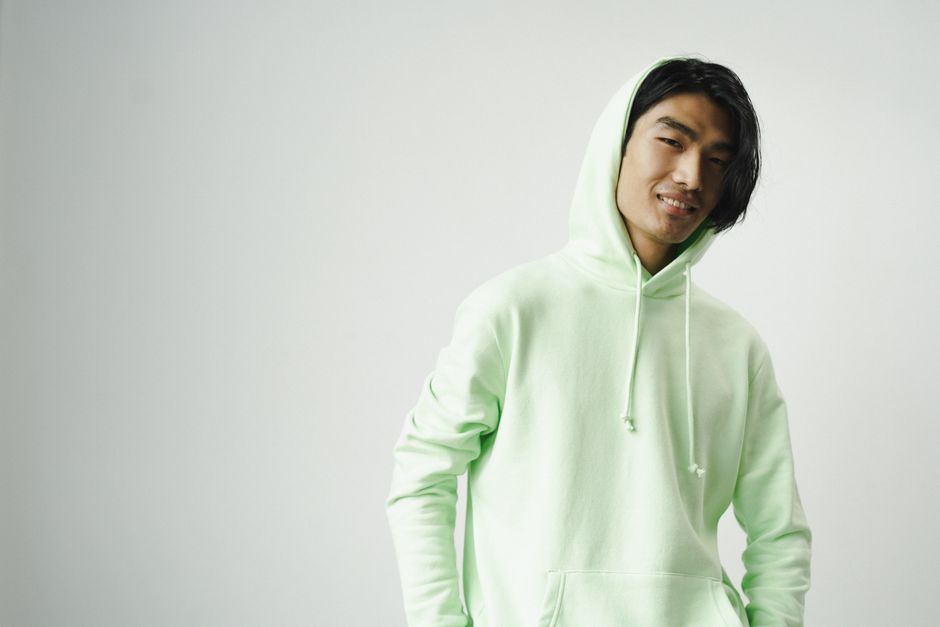
Hoodies are not outerwear. They are mid-layers. Wearing a hoodie alone in cold weather looks unfinished. It also doesn’t keep you warm effectively — the wind cuts right through thin fleece.
Layer your hoodie under something. A denim jacket, a field jacket, a wool overcoat, even a puffer vest. The hoodie adds texture and warmth; the outer layer adds structure and polish.
One exception: the Patagonia Better Sweater is thick enough (390 GSM) to wear as a standalone jacket in mild weather. But even then, it looks better with a collar peeking out — a flannel or a plain white tee underneath.
If you’re going to wear a hoodie as a jacket, make sure it’s heavyweight (300+ GSM) and in a neutral color. Black, charcoal, navy, or olive. No hoodie in a bright color or with a graphic print works as outerwear.
7. Ignoring the Hood Itself
The hood is the most overlooked part of a hoodie. A hood that’s too small looks silly — it barely covers your head and sits awkwardly. A hood that’s too large flops around and looks like a cape.
Good hoods are structured. They have enough fabric to cover your head without being baggy. They should have a slight curve at the front to frame your face. And the drawstring should be functional, not decorative — use it to adjust the fit.
Also: never wear your hood up indoors unless it’s freezing or you’re at a football game. Walking into a coffee shop with your hood up makes you look like you’re hiding something. Pull it down when you walk inside.
If your hoodie’s hood is flimsy or shapeless, retire the hoodie. A bad hood ruins an otherwise good piece.
Final Verdict: The Hoodie Rules
- Fit: Shoulder seams at your shoulder bone. Hem at your hip. Not too baggy, not too tight.
- Fabric: At least 300 GSM cotton fleece. No shiny polyester. No pilling after 3 washes.
- Logos: None or small chest logo. No full-back prints. No logo stacking.
- Pairing: Clean dark jeans or chinos. Never ripped jeans. Never joggers.
- Layering: Hoodie under a jacket. Not as a jacket (unless it’s 300+ GSM).
- Hood: Structured, functional drawstring. Down when indoors.
- Price: $50-$150 gets you excellent quality. Under $30 is risky. Over $200 is diminishing returns.
Skip the logo-heavy, thin, poorly-fitted hoodies. Buy one good one in a neutral color. Wear it with clean jeans and a jacket. That’s it. That’s the whole trick.