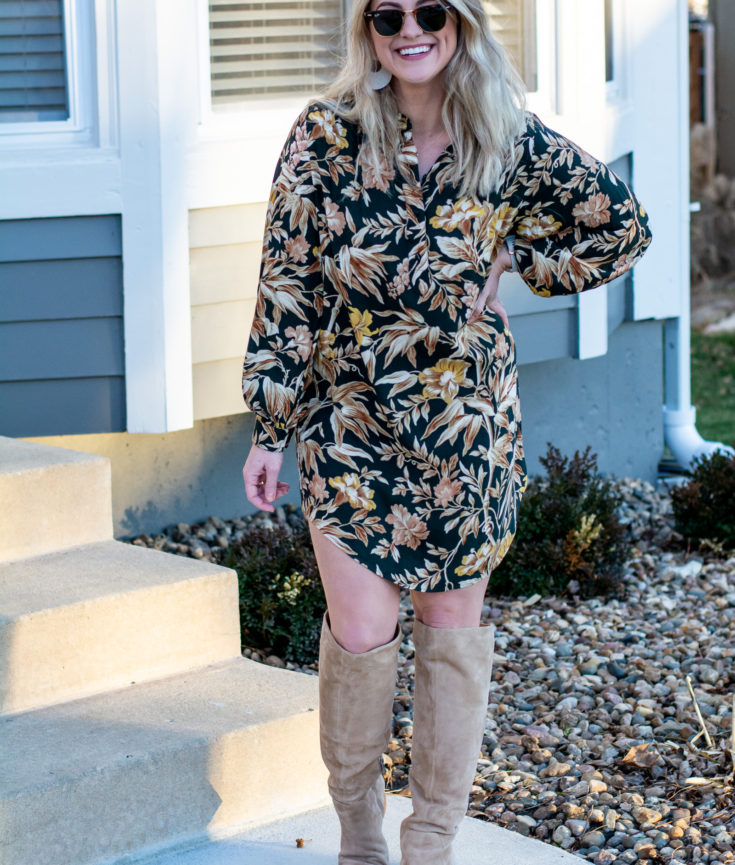
Here’s the bottom line: a floral dress works in winter if — and only if — you get three variables right. The fabric weight. The floral scale and color palette. And the boot shaft height relative to your hemline. Miss one of those, and the outfit reads “wrong season.” Nail all three, and it’s one of the most versatile cold-weather looks you can build.
Tall beige boots are the right call for this combination. Not black (too visually heavy against most florals), not brown (muddy with warm-toned prints), not white (too bridal). Beige creates a neutral landing zone that lets the print breathe while grounding the outfit in winter’s earth-tone palette.
Why Dark Florals Belong in Winter and Light Ones Don’t
This isn’t subjective — it’s pattern recognition backed by how seasonal fashion actually functions.
Spring florals carry specific visual signals: white or cream backgrounds, pastel blooms, lightweight fabrics like chiffon or cotton lawn, and open airy silhouettes. Every one of those signals reads “warm weather” to the eye. Wear them in January and the visual cue is simply “out of season.”
Winter florals flip every one of those variables:
- Dark backgrounds — navy, black, forest green, burgundy, chocolate brown
- Rich bloom colors — rust, ivory, gold, dusty mauve, deep rose
- Heavier base fabrics — velvet, ponte, heavy crepe, jersey knit, brushed satin
- Longer, more structured silhouettes — midi or maxi cuts, wrap styles with real coverage
The Free People Intimately Wild Botanist Midi Dress (~$128) nails this. Deep forest green background, ivory and burgundy blooms, stretchy jersey that holds warmth without adding bulk. It reads clearly as winter without any additional context from the wearer.
The Reformation Lucie Dress (~$218) takes a different approach: a tightly spaced ditsy floral on heavy black crepe. Because the background dominates and the fabric drapes with structure, it reads fall/winter without effort. Two different formulas, both correct.
The Fabric Rule That Changes Everything
Lightweight fabrics undermine the entire exercise. A dark floral on 100% viscose georgette — regardless of how moody the print looks on a hanger — will look cold and sheer against grey winter light. You need substance.
Target these fabric compositions when shopping:
- Jersey knit (92% polyester / 8% spandex or similar): stretchy, warm enough for layering, holds shape after repeated wear
- Ponte (65% polyester / 30% rayon / 5% spandex): structured, office-appropriate weight, minimal stretch
- Velvet: immediately seasonal, richens any floral print, heavier than it looks on the rail
- Heavy crepe: flows without being transparent, holds heat better than chiffon or georgette
Avoid anything described as “lightweight,” “flowy,” or “airy” in the product copy. Those words signal fabrics under 120 GSM. Most fast-fashion sites don’t publish GSM data, so you’re reading between the lines. The H&M Floral-Print Jersey Dress (~$35) is a reliable budget exception — enough weight to layer under a coat without going flat.
Floral Scale: The Variable Most Guides Skip
Large painterly blooms (roughly 4–6 inches across) read as bold and deliberate in winter. Small ditsy prints work well if the background is very dark. The danger zone: medium-sized flowers in pastel tones on a light background. That reads “Easter brunch,” and no boot choice rescues it.
The background-to-bloom color contrast is the real signal. High contrast (dark ground, vivid or light blooms) means seasonally flexible. Low contrast (cream ground, blush blooms) means spring. This applies regardless of how the dress is marketed or what season it appears in on the retailer’s website.
How to Layer a Floral Dress for Cold Weather Without Wrecking the Silhouette
Layering is where most people fail this outfit. Too much and the dress disappears. Too little and the outfit only holds up on the mildest winter days. Here’s the sequence that actually works:
- Base layer under the dress — A thin thermal or fitted long-sleeve top in a neutral that matches or closely blends with your floral’s background color. Black thermal under a navy or black-ground floral. Ivory ribbed turtleneck under a cream and burgundy print. This extends warmth without adding bulk, and the coordinated color keeps the thermal from reading as an afterthought when the coat comes off.
- Tights or opaque hosiery — 70–100 denier matte tights in black or dark brown. Not patterned. Not sheer. Sheer hosiery in winter doesn’t provide meaningful warmth and reads unfinished. The tights will tuck into your tall boots, so shade matters less than denier — go heavier.
- A structured outer layer — A fitted wool or wool-blend coat in camel or beige harmonizes with the boots and doesn’t fight the print. A cream blazer works indoors. A leather or faux-leather jacket in brown or black adds edge. Skip the oversized puffer unless it’s a packable style you’ll remove at the door — puffers swamp midi silhouettes and flatten the dress beneath them.
- Accessories that anchor the season — A wool beret, a cashmere scarf in camel or rust, a structured leather handbag in a neutral. These signal “winter” before anyone processes your print. The accessories do contextual work that makes the floral readable as deliberate rather than seasonal confusion.
One layer you probably don’t need: a belt over the coat. Unless you’re specifically trying to define the waist over a wrap coat, a belted outer layer competes with the dress’s own structure. Let the dress carry the silhouette.
The Coat Color That Does the Most Work
Camel or beige coat plus tall beige boots creates a tonal frame around the floral dress — the print becomes the focal point because everything surrounding it is neutral. This is the safest, most reliable version of the formula.
A black coat with beige boots also works, but creates more visual separation between the upper and lower body. It’s a bolder choice and reads best when the dress has significant black in its background. A navy coat paired with a navy-ground floral and beige boots is a sophisticated variation — it unifies the outfit through color repetition at coat and dress, while the beige boots serve as the contrast anchor at the bottom.
Indoor vs. Outdoor Planning
Once the coat comes off, what remains is: dress plus tights plus boots plus whatever you wore underneath. That indoor version needs to work on its own. A fitted ribbed turtleneck underneath a V-neck wrap dress creates a complete indoor look — intentional, not like you’re keeping the coat on because you didn’t finish getting dressed. Plan both versions before leaving the house.
Tall Beige Boots: The Numbers That Actually Determine Fit
Not all “tall beige boots” are the same product. These are the differences that affect whether the outfit proportions work or fall apart:
| Boot | Shaft Height | Heel Height | Price (approx.) | Best Fit For |
|---|---|---|---|---|
| Steve Madden Gorgeous | 16 inches | 3.5 inch block | ~$130 | Everyday wear, first purchase |
| Sam Edelman Elina | 14.5 inches | 3 inch block | ~$150 | Comfort priority, wider calves |
| Stuart Weitzman Highland | 17 inches | 4 inch stiletto | ~$575 | Formal occasions, narrow calves, longevity |
| Zara Heeled Leather Knee High Boot | 15 inches | 3 inch block | ~$129 | Trend rotation, seasonal testing |
| Aldo Keeper | 13 inches | 2.5 inch block | ~$110 | Budget entry, shorter inseams |
The shaft height versus your dress hemline gap is the critical measurement. With a midi dress hitting mid-calf (hemline typically 40–44 inches from shoulder), you want the boot shaft to meet the hem or leave at most a 1–2 inch gap. Larger gaps read as mismatched proportions, not a deliberate styling choice.
Measure calf circumference before ordering online. The Sam Edelman Elina runs at roughly 14.5 inches of shaft circumference, which accommodates wider calves comfortably. The Stuart Weitzman Highland runs closer to 13.5 inches — that’s a deliberate design choice for its target customer, not an oversight. A boot that won’t zip past the calf is a return, not a styling problem to work around.
Verdict: For most people building this outfit for the first time, the Steve Madden Gorgeous (~$130) is the right starting point. Block heel means real walkability, a 16-inch shaft handles most midi hemlines, and the price doesn’t penalize you if you change your floral dress next season. The Stuart Weitzman Highland is the right buy if you want something to wear for the next eight to ten years — genuine leather, consistent sizing run after run, and a strong resale market if you change your mind.
The Formula Is Proven. Start With the Boots.
A dark floral midi, 70+ denier tights, a camel or cream coat, and tall beige knee-high boots is a street-style repeat from November through February every single year. It solves the “interesting but not trying too hard” problem that most winter outfits don’t. If you already own a floral dress that passes the fabric and color test above, you don’t need a new one. Buy the boots and the outfit builds itself around them.
Five Mistakes That Make This Outfit Look Wrong
Skipping the Tights Entirely
Bare skin between the boot shaft and dress hem creates a skin-colored horizontal stripe at exactly the wrong spot — usually mid-knee. It reads unfinished in summer and genuinely off in winter. Tights are non-negotiable. Matte black, 70–100 denier, no pattern. They disappear into the boots and don’t compete with the floral print.
Choosing a Boot with Too Short a Shaft
An ankle boot or mid-calf boot paired with a midi dress leaves a long expanse of leg between the boot top and hemline. The boot ends below the widest part of the calf and the proportion breaks. If you can only find boots in the 10–12 inch shaft range, a mini dress works better than a midi. The knee-high shaft — 14 inches minimum — is the specific variable that makes the midi silhouette function.
Getting the Beige Tone Wrong
Beige spans from cool greige (grey-beige) to warm yellow-tan. A cool-toned floral on a navy ground paired with warm yellow-beige boots creates a subtle temperature clash that photographs badly even when you can’t identify it in the mirror.
Check your dress’s dominant temperature: if your blooms are burgundy, rust, and ivory, your boots want warm tan. If your flowers are lilac, dusty blue, and cream, your boots want cool greige or nude. When unsure, natural tan suede splits the difference and works against almost any palette — which is why the Stuart Weitzman Highland has remained a reference point for this look for over a decade.
Choosing a Coat That Competes With the Dress
A brightly colored coat (red, cobalt, emerald) over a busy floral print creates two focal points competing for the same attention. One element needs to be neutral. Either wear a neutral coat over the floral (correct), or wear a solid dress under a statement coat (a different outfit, also fine). A printed dress under a printed or bright coat rarely resolves into a clear visual statement.
Wearing This in the Wrong Context
A floral midi dress sets a dress code ceiling. It reads business casual at best in most corporate environments, and genuinely well-dressed in casual-to-smart-casual contexts — dinners, creative offices, weekend events, dates. For strictly formal corporate settings or black-tie events, a solid-colored dress with the same tall beige boots does the same work without the register mismatch.
The floral is the variable that determines the occasion range. Know the ceiling before you choose where to wear it, and the outfit becomes a reliable tool rather than a gamble.