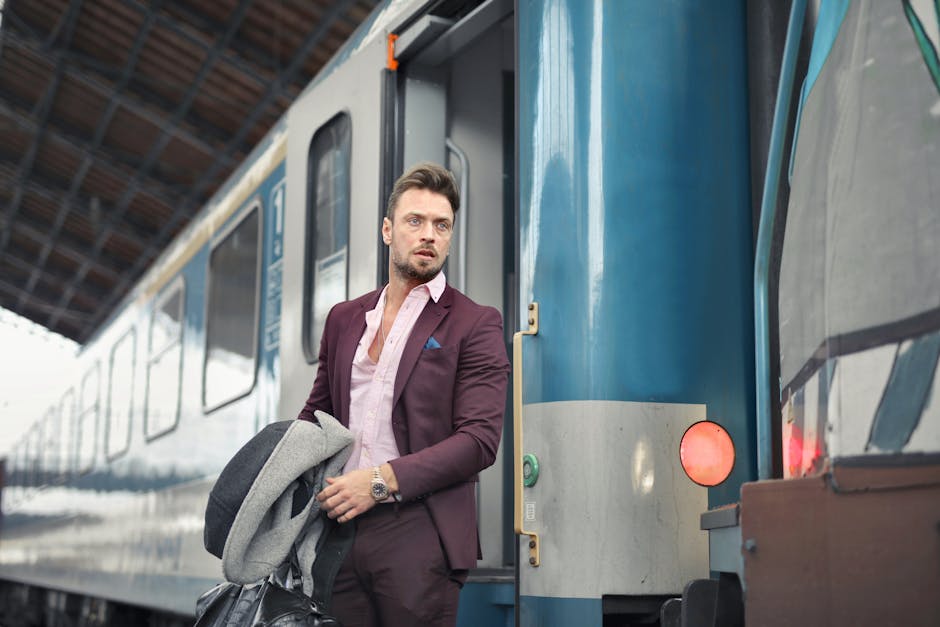
The terminal at 5:45 AM presents a specific kind of sartorial chaos. You see the extremes: the traveler in oversized, pilled fleece who has prioritized comfort to the point of total aesthetic surrender, and the individual in a stiff, three-piece suit who appears physically pained by the constraints of a narrow economy seat. Somewhere in the middle of this spectrum lies the person who is truly best dressed en route. This individual understands that travel is a high-performance activity that requires a specific uniform. It is not merely about looking good for the destination; it is about maintaining a level of dignity and composure through the friction of security lines, temperature-unstable cabins, and the inevitable delays of modern transit. Achieving this balance is less about following trends and more about understanding the architecture of a garment and the physics of the textiles involved.
True en route style is a quiet discipline. It requires a refusal to accept the false dichotomy between being comfortable and being presentable. When we analyze the silhouettes that dominate the first-class lounges of London, Tokyo, and New York, we see a recurring theme of structural softness. These are garments that allow for a full range of motion—essential for hoisting a carry-on into an overhead bin—while maintaining a sharp, intentional line. The goal is to arrive at your destination looking as though you have just stepped out of a private car, even if you have spent the last eleven hours in a pressurized aluminum tube.
How can you achieve the best dressed en route look while maintaining comfort?
The foundation of being best dressed en route is the mastery of the “Third Piece” rule, adapted for the realities of the airport. In a traditional setting, the third piece—a blazer, a cardigan, or a structured vest—elevates a basic shirt and trouser combination. In the context of travel, this piece must also serve as a functional layer against the aggressive air conditioning of an airplane cabin. A heavy-gauge cashmere wrap or a deconstructed trench coat serves this purpose perfectly. These items provide the necessary visual weight to ground an outfit, preventing it from looking like pajamas, while offering the tactile comfort of a blanket.
Proportion plays a significant role in transit chic. If you opt for a wide-leg trouser—currently a staple of the travel elite due to the lack of restriction on the legs—the top must be more tailored. Conversely, if you prefer the compression and streamlined look of a high-end legging or slim knit pant, an oversized knit or a structured shirt is required to balance the silhouette. This interplay of volumes is what separates a thought-out travel outfit from a random assortment of gym clothes. It is an intentionality that signals you are in control of your environment, rather than a victim of it.
Color palettes for the best dressed en route traveler are almost exclusively monochromatic or tonal. Navigating a bustling terminal is mentally taxing; your wardrobe shouldn’t add to the sensory overload. Shades of camel, navy, charcoal, and cream allow for easy mixing and matching if your luggage goes missing, but more importantly, they hide the inevitable wear and tear of travel. A coffee spill or a smudge of dust from a suitcase is far less noticeable on a textured oatmeal knit than on a bright white cotton tee. By sticking to a restrained palette, you create a cohesive look that feels expensive and curated, regardless of the individual price points of the items.
Which luxury brands offer the best performance for long-haul travel?

When selecting pieces for an en route wardrobe, certain brands have carved out a niche by focusing on the intersection of luxury and utility. These are not brands that merely make beautiful clothes; they make clothes designed to survive the rigors of movement. Toteme is perhaps the most prominent example in the current market. Their silk monogram sets (approx. $1,100 for the set) have become a uniform for the fashion set. While silk might seem counterintuitive for travel, Toteme uses a heavy-weight silk twill that resists deep creasing far better than cheaper alternatives. The pro is the immediate elevation of the wearer; the con is that it still requires steaming upon arrival to look truly pristine.
Loro Piana remains the gold standard for those who prioritize fabric quality above all else. Their “Summer Walk” loafers (approx. $950) are ubiquitous in private aviation for a reason: they are incredibly lightweight and feature a non-slip latex sole that is practical for navigating slick airport floors. The pro is the unparalleled comfort and the prestige of the brand; the con is the delicate nature of the suede, which can be easily ruined by a sudden rainstorm outside the terminal. For those seeking a more structured outer layer, the Max Mara 101801 Icon Coat (approx. $4,000) is a masterpiece of travel engineering. The wool and cashmere blend is remarkably resilient, and the oversized sleeves allow it to be draped effortlessly over even the bulkiest of sweaters.
For a more technical approach, Wardrobe.NYC offers “Release” sets that are specifically designed as modular uniforms. Their leggings (approx. $450) use a high-density Italian stretch fabric that provides genuine compression, which is beneficial for circulation during long flights. The pro here is the structural integrity—these leggings will not bag at the knees or lose their shape after ten hours of sitting. The con is the price point for what is essentially a basic item, though the longevity often justifies the initial outlay for frequent flyers.
Comparison of Leading Travel-Ready Brands
| Brand | Hero Product | Approx. Price | Primary Benefit | Notable Drawback |
|---|---|---|---|---|
| Toteme | Silk Monogram Set | $1,100 | High aesthetic impact | Requires post-flight care |
| Loro Piana | Summer Walk Loafer | $950 | Exceptional comfort | Suede is weather-sensitive |
| Wardrobe.NYC | Compression Legging | $450 | Circulation support | High cost for basics |
| Max Mara | 101801 Icon Coat | $4,000 | Timeless silhouette | Significant investment |
What are the essential garments for a curated en route wardrobe?
Building the perfect travel outfit requires a strategic selection of pieces that can perform multiple roles. The first essential is a high-quality knit pant. Unlike denim, which can become restrictive and uncomfortable due to bloating at high altitudes, a knit pant moves with the body. However, the key is the fiber content. A 100% cashmere pant will often “bag out” at the seat and knees within hours. A blend of wool, silk, and a small percentage of elastane or nylon will maintain its shape much better. Look for brands like Falconeri or Theory for mid-range options that offer this technical balance.
The second essential is the oversized button-down shirt, preferably in a heavy poplin or a silk-cotton blend. This serves as a versatile base layer. It can be worn tucked in for a polished look or left open over a camisole as a light jacket. The collar provides a touch of formality that elevates the entire ensemble. The Frankie Shop offers an “Lui” organic cotton shirt (approx. $185) that has the perfect oversized proportions for travel. The pro is the crisp look it maintains; the con is that 100% cotton poplin can show wrinkles if you are a restless sleeper on the plane.
Finally, no en route look is complete without the right outerwear. Even if you are traveling from one tropical climate to another, the airplane cabin is a micro-climate of its own. A lightweight, packable puffer or a soft-structured blazer is vital. Moncler excels in this category with their ultra-lightweight down jackets (approx. $1,200) that can be compressed into a small pouch. These provide warmth without the bulk, making them easy to stow once you land. The trade-off is the sporty aesthetic, which may not suit every traveler’s personal style.
“The secret to being best dressed en route is not in the complexity of the outfit, but in the quality of the materials. A simple grey sweater in high-grade Merino wool will always look more sophisticated than a complex designer piece made of polyester.”
Consider the role of the “base layer.” A seamless bodysuit from a brand like SKIMS (approx. $60) or Wolford (approx. $250) can be a transformative travel item. It provides a smooth foundation, prevents shirts from untucking, and adds an extra layer of warmth. The Wolford Colorado Bodysuit is particularly favored by frequent travelers for its high cotton content and elegant turtleneck, which protects the neck from the dry cabin air. The pro is the sleek silhouette; the con is the inconvenience of a bodysuit during a quick layover bathroom break.
How do different footwear options compare for airport efficiency and style?

Footwear is often the most contentious part of the en route uniform. You need something that can be easily removed for security checks (unless you have TSA PreCheck), provides enough support for long walks between gates, and doesn’t look like an afterthought. Sneakers have become widely accepted, but they must be pristine. A scuffed gym shoe will immediately downgrade a luxury travel outfit. The Nike P-6000 (approx. $110) or the New Balance 9060 (approx. $150) are currently popular for their “dad shoe” aesthetic, which pairs surprisingly well with tailored trousers. They offer excellent arch support, which is a significant pro, but the con is their bulkiness in a carry-on if you decide to change mid-flight.
For those who prefer a more classic look, the leather loafer is the superior choice. A soft-heeled loafer, such as the Gucci Brixton (approx. $920), allows you to fold down the back and wear it as a mule, making it the ultimate transition shoe. The leather is thin enough to be comfortable for hours but thick enough to provide a polished finish. The pro is the versatility—it works as well in the lounge as it does at a business dinner upon arrival. The con is the lack of cushioning compared to a technical sneaker.
Boots are generally discouraged for the en route portion of a trip due to their weight and the difficulty of removal. However, if you are traveling to a cold climate and need to save space in your luggage, a Chelsea boot with elastic side panels is the only acceptable option. The Blundstone 585 (approx. $230) is a favorite among practical travelers for its durability and ease of use. While it leans more toward the rugged side of the fashion spectrum, it can be styled effectively with dark denim and a heavy knit. The pro is the weather protection; the con is the utilitarian look that lacks the refinement of a loafer or a designer sneaker.
- Sneakers: Best for long terminals and casual looks. Choose leather or high-end mesh versions for a cleaner aesthetic.
- Loafers: The gold standard for professional travel. Look for collapsible heels for maximum convenience.
- Chelsea Boots: Necessary for winter travel but choose styles with no laces to expedite security transit.
- Mules/Slides: Only acceptable if they are structured and made of premium materials (e.g., Hermès Oran or similar). Avoid rubber flip-flops.
Ultimately, being the best dressed person en route is about respect—respect for the journey, for the people you encounter, and for yourself. When you step onto a plane in a considered outfit, you are making a statement that the transition matters as much as the destination. It is a form of armor that protects you against the stressors of modern travel. By choosing high-quality fibers, balanced proportions, and functional footwear, you ensure that you arrive not just on time, but in style. The nuances of a well-chosen scarf or the drape of a heavy silk trouser may seem minor, but in the high-stakes environment of international transit, these details are what define the elite traveler.